
0%
Loading ...


Inconsistent hot water is rarely a surface-level inconvenience and is often an early indicator of internal stress in a water heater. Temperature fluctuations, short hot-water cycles, or sudden cold surges indicate that key components are no longer operating in balance.
Homeowners researching water heater repair in Austin often address these symptoms without realizing they indicate underlying mechanical, electrical, or hydraulic issues. Understanding the root causes of inconsistent hot water helps prevent escalation, protect household comfort, and reduce the risk of costly system failure.

Water heaters rely on coordinated operation between heating elements, thermostats, sensors, and water flow controls. When even one component drifts out of specification, the system’s ability to maintain consistent temperature is compromised.
In tank-style heaters, upper and lower heating elements work with thermostats to maintain set temperatures throughout the tank. If one component fails or a thermostat misreads temperature, the system may heat unevenly. This imbalance causes water to fluctuate between hot and lukewarm as different tank layers are drawn during use.
Thermostats are designed with narrow tolerance ranges, so even minor calibration drift can cause frequent on-off cycling. This cycling results in inconsistent output, which becomes noticeable during showers or appliance use. Over time, repeated cycling also increases wear on electrical components.
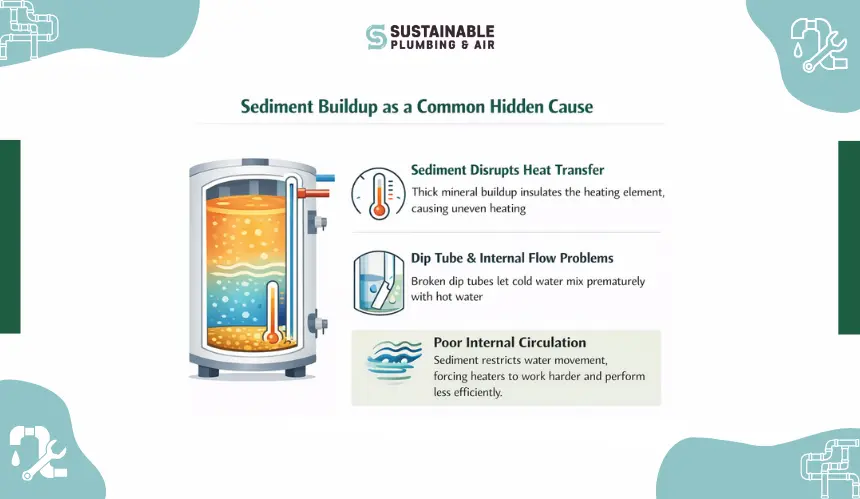
Sediment accumulation is one of the most overlooked contributors to inconsistent hot water, particularly in areas with mineral-rich water supplies. Regular water heater maintenance can help prevent sediment buildup. This buildup interferes with heat transfer and internal circulation.
Minerals settle at the bottom of tank heaters, forming a dense layer that insulates the heating element from the water. As a result, water heats unevenly and more slowly. This uneven heating results in fluctuating temperatures because hot water is depleted faster than the system can recover.
Sediment forces heating elements to work harder and longer to achieve target temperatures. This added strain accelerates component wear and can lead to premature failure. Inconsistent hot water is often the first noticeable symptom before more serious damage occurs.
Did you know? Sediment-related issues can reduce adequate tank capacity, making a full-size heater behave like a smaller unit.

Both traditional and tankless water heaters rely on accurate temperature sensing to regulate output. When sensors fail or drift, the system loses its ability to respond correctly to demand.
Tankless systems use flow sensors and temperature sensors to activate heating only when water is moving, highlighting the importance of tankless water heater repair when inconsistencies occur.If sensors misread flow or temperature, the unit may cycle unpredictably, producing bursts of hot water followed by sudden cooling. These issues often appear intermittently, making them difficult to diagnose without professional assessment.
In electronically controlled systems, sensor data is processed by control boards that determine heating output. Inaccurate data can cause the system to underheat or overheat water. These fluctuations are often mistaken for supply issues when the root cause lies in electronic regulation.
The water flow direction within a tank heater is carefully engineered to maintain temperature stability. When internal flow components degrade, temperature consistency suffers.
The dip tube directs incoming cold water to the bottom of the tank, where it is heated before mixing with the hot water at the top. If the dip tube cracks or deteriorates, cold water mixes with hot water prematurely, causing sudden temperature drops at the fixtures.
When internal flow is compromised, the heater may appear undersized even if capacity is adequate. Homeowners often compensate by raising thermostat settings, which increases energy use and component stress without resolving the underlying issue.
Consistent energy input is essential for stable water heating. Variations in power or gas delivery can produce inconsistent temperatures that mirror internal failures.
Loose connections, aging wiring, or breaker issues can intermittently interrupt power to heating elements. These brief interruptions may not shut the system down entirely but can prevent it from maintaining temperature during peak demand, resulting in fluctuating output.
In gas heaters, inconsistent gas pressure or burner issues can alter flame strength. This variability affects how efficiently water is heated and often results in noticeable temperature swings, especially during extended use.
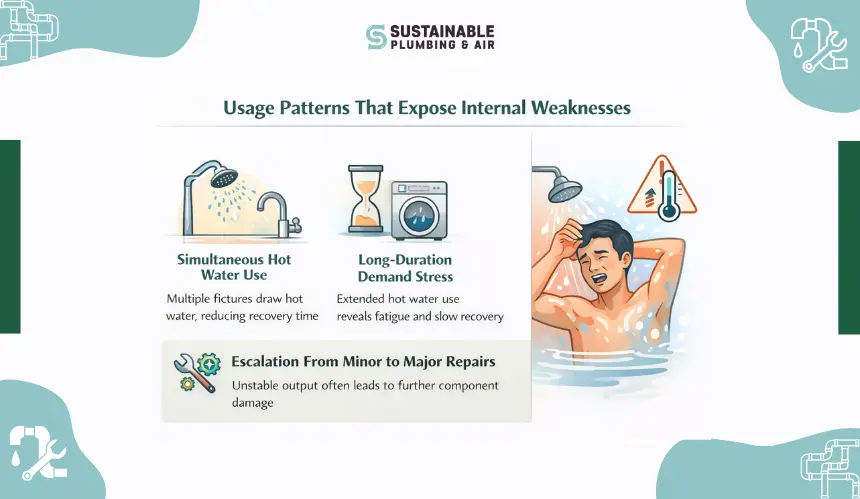
Certain household behaviors reveal heater problems more quickly because they place sustained demand on the system.
Running multiple fixtures at once increases draw rate and reduces recovery time. A healthy heater compensates predictably, but one with internal issues will struggle, making inconsistencies more pronounced during busy periods.
Extended showers or appliance cycles test the heater’s ability to maintain temperature over time. Inconsistent output during prolonged use often indicates heating element fatigue or inefficient recovery rather than simple overuse.
Temperature fluctuations are rarely self-correcting and often indicate progressive internal deterioration. Ignoring these signs allows minor issues to evolve into system-wide failures.
Components under stress tend to fail in sequence. A struggling heating element can overload thermostats, while sediment buildup can damage tank linings. Addressing inconsistency early often prevents cascading damage and reduces overall repair cost.
Unstable temperatures can increase the risk of scalding or prompt excessive thermostat adjustments, which can increase energy consumption. Stable operation is not only a comfort issue but also a safety and efficiency concern.
Not always, but it frequently indicates an internal imbalance that should be evaluated.
Flushing helps when sediment is the cause, but it does not resolve electrical or sensor issues.
Reduced adequate capacity due to sediment or element failure often shortens the duration of hot water.
Yes. Sensor or flow-regulation issues can cause comparable temperature instability.
No. Many issues are repairable if identified before extensive damage occurs.
Inconsistent hot water is one of the clearest signals that a water heater’s internal systems are no longer working in harmony and may require a professional water heater inspection to prevent failure. Whether caused by sediment buildup, sensor drift, flow disruption, or energy supply issues, these problems tend to worsen with continued use.
Early assessment enables corrective action before efficiency declines or components fail, often including water heater replacement if damage is severe.Homeowners seeking accurate diagnosis and long-term solutions often consult experienced providers such as Sustainable Plumbing, where internal system behavior is evaluated holistically rather than treated as an isolated symptom.