
0%
Loading ...


Installing a new water heater is one of the most essential home decisions for comfort, efficiency, and long-term reliability, and it pairs well with water filtration installation for overall plumbing health. For homeowners in Austin, understanding the unique environmental factors, water quality concerns, and household demands is crucial before selecting a new system. While Tank water heaters in Austin remain common due to their reliability and affordability, their performance is heavily influenced by local climate conditions, installation locations, and the city’s well-known hard water challenges, which can be mitigated using water softeners and purification.
This guide explains what Austin homeowners should evaluate before installing a new tank-style water heater to ensure consistent hot water, reduced maintenance, and a longer system life.
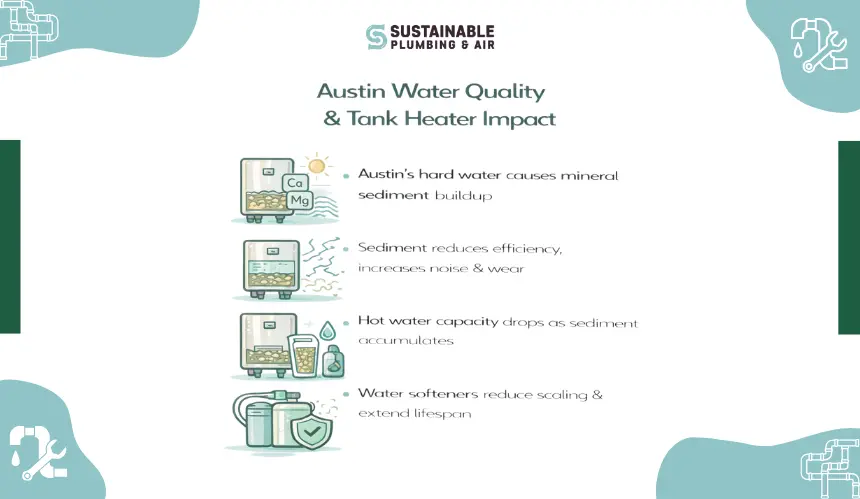
Before installing a new tank water heater, Austin homeowners must consider the region’s well-known water quality issues. The city’s water supply, sourced from the Highland Lakes and treated through a series of municipal processes, contains a high concentration of dissolved minerals.
This mineral-heavy composition directly affects how tank-style systems operate, how often they require maintenance, and how long they last. Understanding these conditions helps homeowners make informed decisions that prevent unexpected repairs and improve long-term system reliability.
Austin’s water has elevated levels of calcium and magnesium. As the water heats, minerals separate and settle at the bottom of the tank. Over time, this sediment buildup reduces heating efficiency, increases operating noise, and forces the system to work harder. Understanding how hard water interacts with tank water heaters helps homeowners plan for proper maintenance and system longevity.
Sediment accumulation reduces the available space for hot water inside the tank. This results in shorter hot water availability, longer heating cycles, and additional wear on the burner or heating elements. Austin households with high water usage should be especially aware of this impact before installation and consider residential plumbing services for system optimization.
Installing a water softener or whole-home water filtration system helps reduce scaling and extend the heater’s lifespan, complementing proper tankless water heater maintenance for modern systems. While not mandatory, many Austin homeowners choose to pair new tank systems with conditioning solutions to improve reliability.

Choosing the right tank size ensures consistent hot water without wasted energy.
Household size and daily routines strongly influence tank size requirements. Larger families or homes with multiple bathrooms often need 50-gallon or 75-gallon tanks. Smaller households may operate comfortably with 40-gallon systems. Considering morning peak use, laundry routines, and dishwashing schedules helps determine the ideal capacity.
An undersized tank leads to frequent shortages, while an oversized tank wastes energy heating unused water. Austin homeowners should evaluate both peak and average usage to ensure their system meets current and future needs, especially as families grow or routines change.
In colder months, incoming groundwater in Austin can be cooler, requiring the heater to work harder. This can reduce effective output, meaning some homes may benefit from a slightly larger tank to compensate for seasonal temperature shifts.

Tank water heaters require proper installation conditions to ensure safety, performance, and longevity.
Many modern homes in Austin place water heaters in garages, utility closets, or attics. Outdoor installations are also common but require units specifically rated for exterior exposure. Heat, humidity, and occasional cold snaps all influence where a tank system performs best.
Gas-based tank water heaters require proper ventilation to exhaust combustion gases safely. Poor ventilation can lead to condensation on metal components or inefficient burning. Austin’s humidity increases the importance of proper venting to prevent moisture-related deterioration.
Because tanks need periodic draining to remove sediment, drainage access is essential. Austin homes with attic installations must ensure proper pan drainage or emergency overflow protection to prevent water damage.
Austin homeowners should evaluate the energy efficiency of their systems to manage monthly utility costs.
Tank heaters continuously store water, leading to heat loss over time. High-quality tank insulation minimizes standby loss. In Austin’s hot climate, attic- or garage-installed heaters may experience increased heat load, making insulation even more critical.
Electric and gas heaters perform differently depending on climate and household usage. Gas heaters tend to reheat faster, which may suit Austin families with higher demand, particularly when paired with water heater repair and maintenance services.Electric units offer quieter operation and a simpler installation, but may operate more slowly in cold weather.
Energy-efficient tanks consume less power and maintain consistent temperatures. Choosing ENERGY STAR–rated units helps reduce long-term energy expenses, and these high-efficiency systems work best when installed by our expert water heater installation team.

Temperature extremes and humidity can affect the lifespan of tank heaters.
Austin’s summer temperatures can exceed 100°F, especially in garages or attics. Prolonged exposure to high heat can overstress heating elements, damage insulation, and accelerate wear. Homeowners should consider installing in shaded or temperature-stable areas whenever possible.
Although Austin winters are mild, occasional freezes can impact water heaters installed outdoors or in unconditioned spaces. Freeze protection measures, such as insulation wraps or heat tape, help prevent damage during cold fronts.
High humidity can accelerate corrosion of metal components, especially tanks installed outdoors or near damp areas. Proper ventilation and rust-resistant materials help reduce these climate-related risks.
Regular maintenance keeps tank systems reliable and efficient.
Due to Austin’s hard water, flushing the tank at least once a year is essential. Flushing removes mineral buildup, improves heating efficiency, and extends component life.
The anode rod protects the tank’s interior from rust. Hard water accelerates anode depletion, meaning Austin homeowners should inspect it every 12–18 months.
Safety valves must operate properly to prevent pressure buildup and protect the system from overheating or bursting.
Most households choose 40–50-gallon units, depending on family size and usage.
Yes. Without regular flushing, sediment buildup accelerates system wear.
Yes, if they are outdoor-rated and protected from freeze exposure.
Typically 8–12 years, depending on maintenance and water hardness.
Yes. They reduce standby heat loss and lower monthly energy expenses.
Choosing a new tank water heater involves evaluating water quality, climate, household needs, installation location, and long-term maintenance expectations. With Austin’s unique combination of hard water and shifting temperatures, homeowners who understand these factors can ensure longer system life, improved performance, and a reliable hot water supply from their tank water heaters for years to come.