
0%
Loading ...


Every Austin homeowner has faced that dreaded dripping faucet, low water pressure, or a mysterious puddle under the sink, as explained in EPA plumbing safety guidelines. While these may seem like minor inconveniences, they often hint at deeper plumbing issues caused by Austin’s unique environment, hard water, aging pipes, clay-rich soil, and fluctuating humidity. Without prompt repair, these small issues can lead to costly water damage, structural problems, or even health hazards.
This article explores the seven most common plumbing problems in Austin homes and how professional plumbing services in Austin, TX can resolve them efficiently and sustainably.
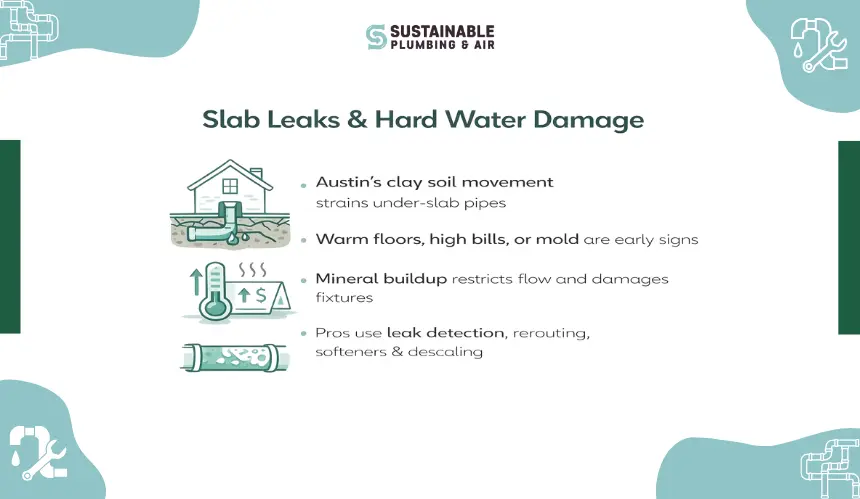
Homeowners in Austin frequently deal with slab leaks, a problem that often goes unnoticed until significant damage occurs.
Austin’s clay-based soil expands when it absorbs water and contracts during dry spells. This natural movement strains the pipes beneath your foundation, causing cracks or breaks over time.
You may notice warm patches on your flooring, a sudden spike in your water bill, or mold and mildew forming under carpets. These are early warning signs that water is escaping beneath your home.
Licensed plumbers use acoustic listening devices and infrared imaging to locate the exact point of leakage. Depending on severity, they may reroute the pipes, perform spot repairs, or use trenchless technology, minimizing disruption to your property.
Austin’s water is known for being hard, which means it contains high levels of calcium and magnesium.
Over time, these minerals build up inside pipes, faucets, and appliances, reducing efficiency and water flow. This leads to low pressure, higher utility bills, and shorter appliance lifespans.
Professional plumbing services in Austin, TX install whole-house water softeners and purification systems that neutralize minerals before they reach your plumbing lines. Regular descaling treatments can also restore proper flow and extend fixture life.

Many Austin homes, especially older ones, were built with galvanized steel or copper pipes that naturally corrode over time.
Common signs include discolored water, metallic taste, leaks, or reduced water pressure. Ignoring these can lead to burst pipes or contaminated water.
Experts use video pipe inspection tools to assess interior corrosion and may recommend sewer line inspection for hidden damage. They may recommend repiping with PEX or modern copper piping, which lasts longer and improves water quality.
Austin’s lush neighborhoods come with an unexpected challenge, tree roots.
Roots naturally seek out moisture and nutrients. Small cracks in your sewer pipes become easy entry points, causing clogs and even pipe collapse.
If multiple drains back up simultaneously or you smell foul odors outdoors, you likely have root intrusion.
Plumbers perform sewer line cleaning with camera inspections and hydro-jetting, removing roots and debris efficiently.In severe cases, trenchless pipe lining repairs the damage without excavation.
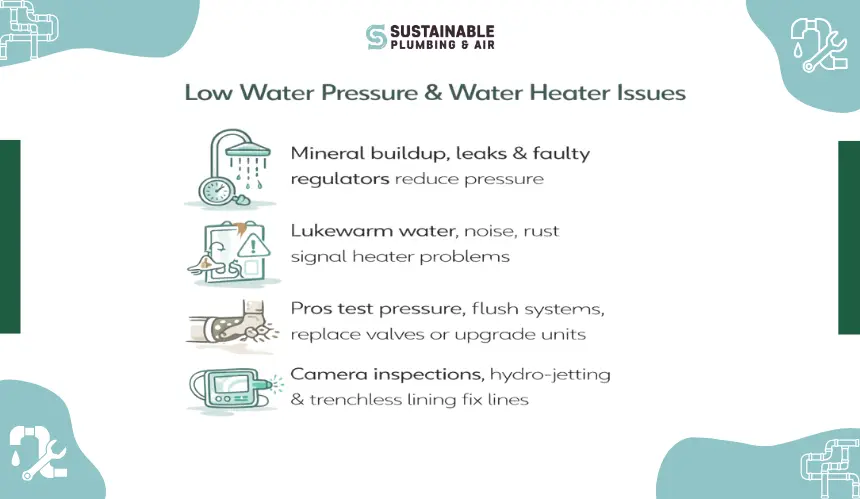
Low water pressure can be frustrating, especially when it affects showers, sinks, and washing machines simultaneously.
This issue often stems from mineral buildup, small leaks, faulty pressure regulators, or city water supply fluctuations.
Technicians test pressure at various points in the system, clean aerators, and flush the lines. If needed, they install pressure boosters or new valves to stabilize consistent flow.
Whether tank or tankless, your water heater plays a vital role in daily comfort , until it fails.
You might notice lukewarm water, strange noises, or rust-colored output from your faucets. Sediment buildup from hard water is a leading cause in Austin homes.
Plumbers flush the tank to remove sediment, replace worn anode rods, or recommend a tankless water heater installation for greater energy efficiency and reliability.

Clogged drains are one of the most common reasons homeowners call for plumbing services in Austin, TX.
Grease, hair, soap scum, and debris accumulate inside pipes, creating slow drainage and unpleasant odors.
Rather than using chemical cleaners that damage pipes, Professionals rely on drain cleaning services with hydro-jetting, camera inspections, and eco-safe enzymatic treatments to restore free-flowing drains safely.
Austin’s diverse climate demands proactive plumbing care.
Professional maintenance services often include:
By staying ahead of issues, you’ll avoid emergencies and extend your plumbing system’s lifespan, with routine water heater repair and maintenance as part of preventive care.
At least once a year, especially before heavy rain seasons or during extreme temperature shifts.
Yes. It leads to scale buildup that reduces flow, corrodes fixtures, and shortens appliance lifespans.
Monitor your water meter for movement when all fixtures are off, or schedule a camera inspection with a licensed plumber.
Absolutely. Low-flow fixtures and tankless heaters save water and energy without compromising performance.
Every 8–12 years for tank models, though proper maintenance can extend lifespan.
From slab leaks to sewer backups, every plumbing challenge in Austin requires a mix of local expertise and eco-friendly precision. Trusted plumbing services in Austin, TX, like those offered by Sustainable Plumbing & Air, ensure fast diagnosis, durable repairs, and environmentally responsible solutions. Protect your home before small issues turn into costly repairs, your pipes will thank you.