
0%
Loading ...
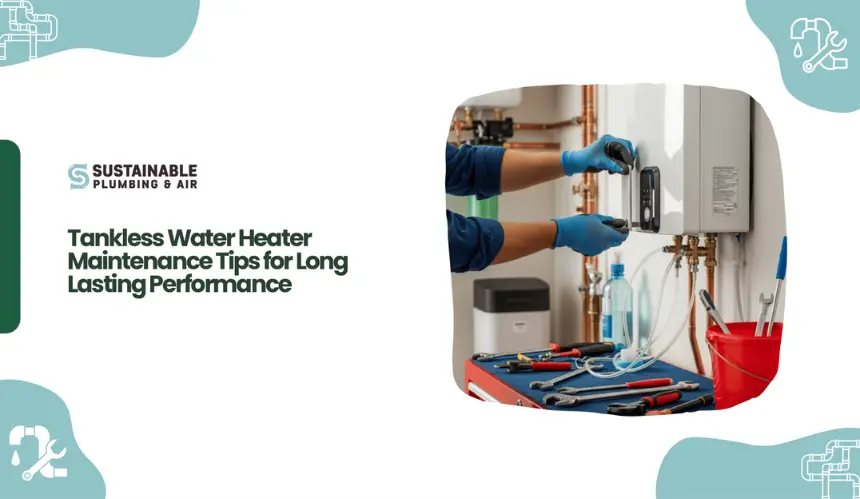
Tankless water heaters are designed to deliver hot water efficiently and on demand, but their performance is closely tied to how well they are maintained over time. Unlike traditional storage systems, these units rely on sensitive internal components, precise flow regulation, and consistent heat exchange to function correctly.
For homeowners in Austin, TX, mineral content in the water supply, fluctuating usage patterns, and seasonal demand shifts can quietly influence how hard a tankless system has to work.
Without proper maintenance, these everyday factors place unnecessary strain on the heat exchanger and internal valves, shortening the system’s effective lifespan.
This article focuses directly on practical tankless water heater maintenance tips that support long-lasting performance.
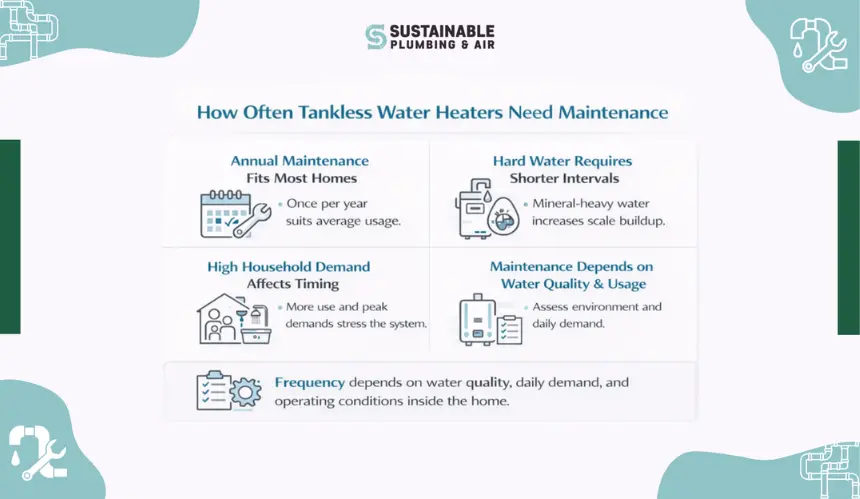
Maintenance frequency is one of the most common points of confusion for tankless water heater owners. These systems do not follow a one-size-fits-all schedule because their upkeep depends on water quality, daily demand, and operating conditions inside the home. Understanding how often maintenance is actually needed helps prevent both neglect and unnecessary servicing.
For the majority of households, a once-a-year maintenance schedule is sufficient to keep a tankless system operating efficiently. Annual servicing focuses on removing early mineral deposits, checking flow-related components, and ensuring the unit continues to regulate temperature accurately. This interval aligns well with normal residential usage patterns where hot water demand remains consistent throughout the year.
Homes supplied with mineral-heavy water often need maintenance more than once per year. Areas such as Round Rock, TX are known for hard water conditions, which accelerate scale buildup inside heat exchangers.
In these environments, shorter maintenance intervals help prevent efficiency loss and reduce stress on internal components before performance is affected.
High-usage households place additional strain on tankless systems. Larger families, frequent appliance use, or extended peak-hour demand increases heat exchanger workload and flow regulation activity. In these cases, maintenance schedules should reflect usage intensity rather than calendar timing alone, ensuring internal components remain balanced and responsive.
Mineral scale is one of the most common performance threats to tankless water heaters, and it develops quietly. As water is heated repeatedly, dissolved minerals separate and settle along internal surfaces.
Over time, this buildup interferes with heat transfer and forces the system to work harder to reach the desired temperature. Flushing directly addresses this issue before efficiency begins to decline.
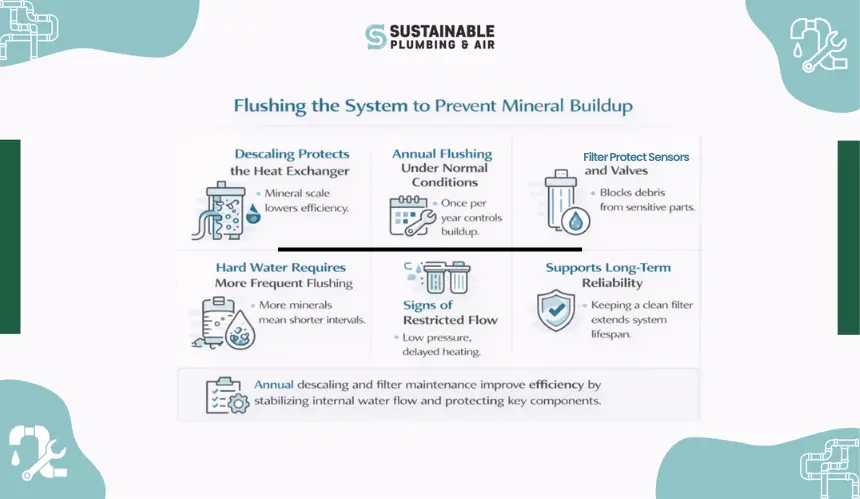
The heat exchanger is the core working component of a tankless system, and it is also the most vulnerable to mineral exposure. When scale coats its internal channels, heat cannot transfer efficiently from the burner to the water.
This leads to longer heating cycles, increased energy use, and uneven temperature output. Regular descaling keeps these surfaces clean, allowing heat to move freely and reducing mechanical strain during daily operation.
Under normal water conditions, flushing a tankless water heater once per year is generally sufficient to control mineral accumulation and maintain efficient heat transfer. This annual interval aligns with the rate at which scale forms inside the heat exchanger during standard residential use.
In areas influenced by large surface water supplies, such as Lakeway, TX, mineral levels can vary throughout the year. These fluctuations may cause scale to develop more quickly, even when overall water quality appears stable.
In such cases, flushing at shorter intervals helps prevent early buildup that can reduce efficiency before any visible performance issues occur.
Flushing does more than restore heating performance. It stabilizes internal flow paths, reduces stress on temperature sensors, and helps the system maintain accurate output during peak demand. Over time, this preventive step supports smoother operation and lowers the likelihood of maintenance-related error codes appearing unexpectedly.
The water inlet filter plays a quiet but critical role in protecting a tankless water heater from internal damage. As water enters the system, this small component traps sediment and debris before it can reach sensitive valves and sensors.
When the filter becomes clogged, flow is restricted, and the system may struggle to maintain stable heating performance.
The inlet filter acts as a first line of defense for internal components that rely on clean, unobstructed water flow. By stopping sediment before it enters the system, the filter helps protect flow sensors, control valves, and narrow internal passages from abrasion and blockage.
This protection is especially important for maintaining accurate temperature regulation and consistent system response during daily use.
A restricted inlet filter often reveals itself through subtle performance changes rather than complete failure. Reduced hot water pressure, delayed temperature response, or inconsistent output can all indicate that sediment is limiting flow.
In areas with ongoing construction or soil disruption, such as parts of Cedar Park, TX, sediment levels in municipal water lines may increase temporarily, making periodic filter inspection particularly important.
Keeping the inlet filter clean allows the system to operate within its intended flow range. This reduces unnecessary strain on internal components and helps the unit respond accurately to demand changes.
Over time, routine filter maintenance contributes to smoother operation and lowers the risk of performance issues that stem from restricted water movement rather than mechanical faults.
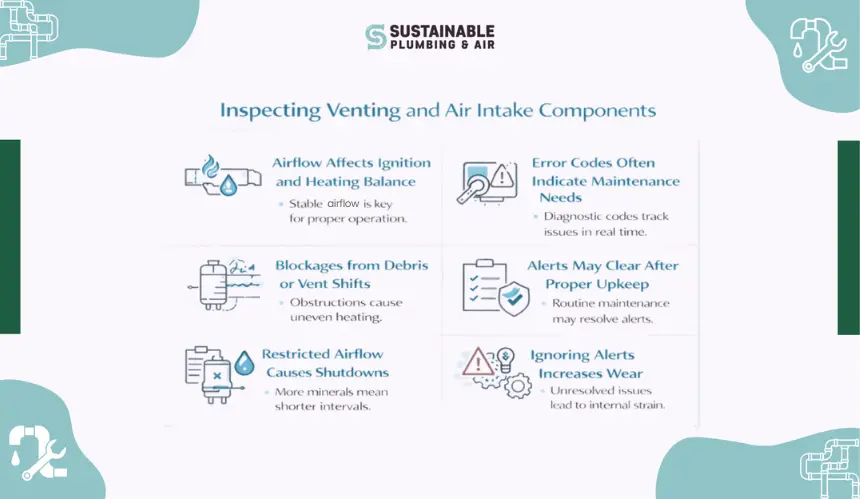
Proper airflow is essential for stable operation in a tankless water heater. Venting and air intake components control how combustion air enters the system and how exhaust gases are released.
When these pathways are restricted or misaligned, performance issues can develop even if the heating components themselves are in good condition.
The venting system directs exhaust gases safely out of the home, while the air intake supplies the oxygen needed for consistent combustion. Together, they allow the burner to operate efficiently and maintain precise temperature control.
Any disruption in airflow can affect ignition timing, heat output, and overall system balance, making regular inspection an important preventive step.
Blockages are not always obvious. Outdoor debris, nesting materials, or shifting vent connections can gradually limit airflow without triggering immediate alerts.
In neighborhoods surrounded by dense greenery and natural terrain, such as Barton Creek, TX, seasonal leaf buildup or wind-driven debris can collect near exterior vent openings. These obstructions may reduce combustion efficiency long before visible performance problems appear.
Restricted airflow forces the system to compensate during operation. This can lead to delayed ignition, uneven heating output, or unexpected shutdowns designed to protect internal components.
Over time, repeated airflow strain increases wear on sensors and control mechanisms, even when water quality and internal maintenance are otherwise well managed.
Tankless water heaters are designed to communicate when something is affecting performance. Built-in diagnostics track operating conditions in real time and display alerts when the system detects irregular flow, temperature instability, or combustion issues.
Paying attention to these signals allows minor maintenance needs to be addressed before they escalate into larger performance problems.
Many system alerts are tied directly to maintenance conditions rather than component failure. Codes related to restricted flow, abnormal temperature rise, or ignition delays often point to scale buildup, airflow limitations, or sensor disruption. These alerts are designed to protect the system by prompting corrective action while the issue is still manageable.
Not all error codes require immediate professional repair. Some alerts clear once routine maintenance steps are completed, such as flushing mineral deposits or restoring proper airflow.
In residential areas with older plumbing infrastructure, like Tarry Town, TX, temporary pressure changes or sediment release can trigger alerts without indicating permanent damage. Recognizing when an alert reflects operating conditions helps prevent unnecessary service calls.
Repeated alerts should never be dismissed as normal behavior. When the system continues operating under unresolved conditions, internal components compensate by working harder to maintain output.
Over time, this compensation increases wear on sensors, valves, and control boards. Responding early keeps performance stable and preserves the accuracy of the system’s self-monitoring features.
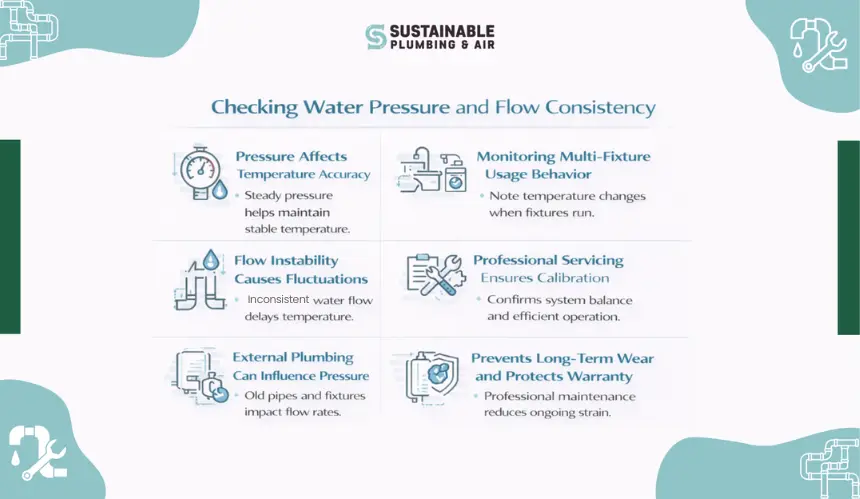
Stable water pressure is essential for a tankless water heater to regulate temperature accurately. These systems adjust heat output based on real-time flow rates, which means pressure fluctuations can disrupt performance even when all internal components are functioning correctly.
When water pressure drops or fluctuates unexpectedly, the system may struggle to maintain consistent outlet temperature. Low pressure can reduce flow below the unit’s activation threshold, while sudden spikes force rapid adjustments in heat output. Both situations can lead to temperature swings, delayed hot water delivery, or brief cold-water interruptions during use.
Flow inconsistency often originates outside the heater itself. Aging plumbing lines, partially closed shutoff valves, or simultaneous fixture use can all disrupt pressure balance.
In hillside neighborhoods such as Lost Creek, TX, elevation changes within the plumbing system can also influence pressure behavior, especially during peak usage periods.
Homeowners can observe pressure consistency by noting how the system responds when multiple fixtures operate at once. Sudden temperature changes or delayed response times often indicate flow instability rather than heater malfunction.
Addressing these conditions early helps the system operate within its designed flow range and reduces unnecessary adjustments during normal operation.
Some aspects of tankless water heater care require professional attention to ensure the system continues operating safely and efficiently. Internal inspections, advanced descaling, combustion checks, and electrical evaluations involve components that are not accessible through routine homeowner maintenance.
Professional servicing also helps identify early performance issues that are not visible from the outside. Sensor calibration, valve response, and airflow balance can gradually shift over time, especially in higher-demand homes, affecting efficiency long before noticeable problems appear.
Skipping professional maintenance may not cause immediate failure, but it increases long-term wear and can impact warranty coverage. Periodic expert evaluation ensures routine upkeep remains effective and internal systems stay properly aligned.
If your tankless water heater has not been professionally serviced in a while, this is a good time to act. Sustainable Plumbing & Air provides thorough system evaluations designed to protect performance, efficiency, and long-term reliability
A water softener can significantly reduce mineral-related stress inside a tankless system by lowering calcium and magnesium levels before water enters the unit. While it does not eliminate the need for maintenance, it slows scale formation and helps internal components operate under more stable conditions over time.
Tankless water heaters rely on electricity for ignition, sensors, and control boards. Frequent or abrupt power interruptions can disrupt system calibration or trigger temporary faults. Using surge protection helps protect electronic components and supports stable system recovery after outages.
Recirculation systems improve hot water delivery speed, but they also increase system run time. This extended operation can raise overall wear if not properly configured. When installed correctly, recirculation pumps do not harm performance but should be accounted for in long-term care planning.
Light operational sounds are normal, especially during ignition or demand changes. New or increasing noise often points to airflow imbalance, mineral presence, or flow irregularities rather than mechanical failure. Addressing these early helps prevent performance disruption.
Many modern systems include vacation or low-demand modes that reduce energy use and internal cycling during long absences. Using these settings limits unnecessary operation and helps preserve internal components while the system is idle.