
0%
Loading ...


Tankless water heating systems continue to gain popularity among homeowners seeking efficient, on-demand hot water solutions. In a city like Austin, where temperatures shift dramatically throughout the year and humidity levels remain consistently high, understanding how climate conditions influence performance is essential.
This guide explains how Austin’s weather patterns affect output, lifespan, and maintenance expectations for tankless water heaters, helping homeowners make informed decisions about upgrades and long-term system care. Many residents exploring tankless water heaters in Austin benefit from climate-aware planning to ensure reliable hot water year-round.
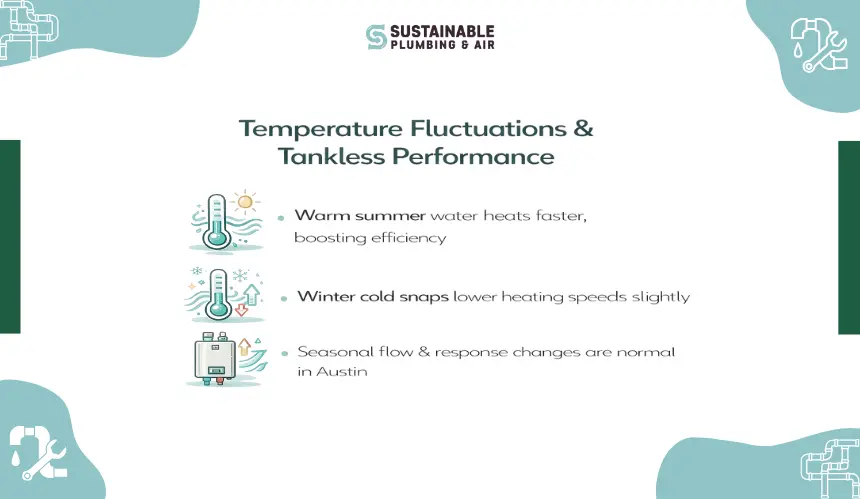
Austin’s climate brings extremely hot summers, mild fall transitions, and occasional winter cold fronts. These changes directly affect system response times and heating efficiency.
During Austin’s long summer season, groundwater enters plumbing systems significantly warmer. Because tankless units heat water as it flows, pre-warmed water reduces the amount of energy required to reach the desired temperature. This leads to faster heating, improved efficiency, and reduced strain on heating components.
Although Austin winters tend to be mild, sudden temperature drops occur several times a year. When groundwater cools, tankless systems must work harder to raise water temperature, which can slightly reduce flow rates. Most modern units adjust automatically, but response time may be slower during the coldest months.
Because tankless units react instantly to incoming water temperature, homeowners experience different performance speeds depending on the season. Hot water may arrive faster in summer and slower in winter, especially in larger homes or older plumbing systems. These variations are normal and expected in Austin’s climate.

The mineral-heavy water found throughout Austin is one of the primary environmental concerns affecting how well tankless water heaters perform and how long they last.
Austin’s water contains high levels of calcium and magnesium, which can lead to scale formation according to EPA water quality guidelines. These minerals settle on heating elements and internal components, forming scale that restricts water flow. As buildup increases, the system works harder, leading to inconsistent temperatures and decreased efficiency.
Due to Austin’s mineral content, tankless systems typically require more frequent flushing and descaling. Many homeowners schedule this maintenance every 6–12 months to keep internal components clear and functioning correctly. Without regular cleaning, performance declines more rapidly. Many homeowners combine tankless systems with water filtration installation for optimal results.
Installing a water softener helps counteract Austin’s mineral-heavy water supply. By reducing scale formation, softeners extend the lifespan of tankless components, improve heating consistency, and reduce long-term maintenance needs.

Austin’s humidity, especially in late spring, summer, and early fall, also influences system durability and maintenance.
Tankless units installed outside are exposed to rain, moisture, and humidity. Over time, moisture can lead to corrosion or wear on metal components. Choosing outdoor-rated units and weather-protected installation locations helps prevent these issues.
Moisture buildup can affect internal electrical components and sensors, which is why emergency water heater services are important when issues arise. While modern systems are designed to handle typical humidity levels, Austin’s seasonal moisture levels make routine inspections essential to ensure optimal performance.
Proper ventilation ensures that heat exchangers stay dry and that moisture does not accumulate inside the system. Adequate airflow helps prevent component failure and corrosion, particularly during humid months.

Extended periods of heat affect not only water temperatures but also the way households use their systems.
During heat waves, incoming water is significantly warmer, reducing the energy needed for heating. This improves system performance and can result in lower electricity or gas usage.
Hot weather often increases water usage. Tankless systems are well-suited for this because they supply continuous hot water without the limitations of a storage tank. Even during heavy usage periods, most modern systems maintain consistent output.
If a household uses hot water continuously during high-temperature periods, tankless systems may run longer than usual. Ensuring that the unit has proper airflow and is well-maintained helps prevent overheating or wear.
Austin’s climate conditions influence how tankless systems should be installed and protected.
Outdoor units remain popular for their space-saving benefits, but they must be suited for outdoor weather exposure. In Austin, units should include freeze protection for rare winter cold snaps and durable casing to handle humidity.
Tankless systems require adequate and stable utility connections. Warm weather does not directly affect utilities, but outdoor systems must remain code-compliant to ensure reliable operation year-round.
Because seasonal temperature shifts influence incoming water temperature, proper system sizing is essential. Correct sizing ensures consistent performance even during colder months when the system needs more power to heat water efficiently. Our water heater installation and replacement services help homeowners choose the right unit.
Yes. They perform well in all seasons, although slightly slower heating is normal during colder months.
Because of hard water conditions, many systems require flushing every 6–12 months.
Humidity can impact outdoor units over time, but proper installation and annual inspections help prevent damage.
Yes. Warmer incoming water improves heating efficiency and reduces energy use.
Outdoor units benefit from freeze protection during rare but possible winter temperature drops.
Austin’s climate, defined by hot summers, occasional winter cold fronts, high humidity, and hard water, plays a significant role in how tankless systems operate. By understanding these environmental factors, homeowners can better maintain efficiency, improve system longevity, and enjoy consistent performance from their tankless water heaters. Climate-aware selection and maintenance ensure that these systems remain reliable and effective for Austin households year-round.