
0%
Loading ...


Cold weather problems often catch Austin homeowners off guard because winter conditions here feel brief and inconsistent. A sudden temperature drop can stress plumbing fixtures that were never designed for extended cold exposure, especially in homes built for warm climates
This blog will explain how cold affects household fixtures, setting the foundation for smart preparation and helping reduce emergency repairs and maintain long-term plumbing reliability.

Winter-related fixture damage in Central Texas is not driven by prolonged cold but by rapid environmental changes. Homes in this region experience sharp overnight temperature drops followed by daytime warming, creating stress conditions that plumbing fixtures are not built to absorb repeatedly. This pattern affects how water behaves inside fixture bodies, valves, and connecting points.
When temperatures fall quickly, standing water inside faucets, valves, and fixture supply points begins to contract and expand unevenly. This internal pressure places stress on metal joints, plastic components, and threaded connections.
Even brief freeze exposure can weaken fixtures without causing an immediate rupture, setting the stage for leaks once normal water pressure returns.
Many Austin-area homes were designed with minimal cold-weather protection because deep freezes were historically rare. Fixtures are often installed near exterior walls, shallow cavities, or areas with limited insulation.
This construction approach allows cold air to transfer rapidly to fixture components, increasing freeze risk even when indoor temperatures remain relatively stable.
Repeated freezing and thawing cause gradual material fatigue rather than instant failure. Fixtures may appear intact after a cold night, yet microscopic cracks can form inside cartridges, housings, or connection points.
These weaknesses often reveal themselves later as reduced water pressure, intermittent leaks, or premature fixture failure, making winter exposure a long-term reliability issue rather than a one-time event.

Not all plumbing fixtures face the same level of risk during winter cold snaps. Exposure, placement, and surrounding construction details determine which fixtures are more likely to experience freeze-related stress.
In Austin homes, vulnerability often depends on how directly a fixture interacts with outdoor air and how well it is shielded from sudden temperature changes.
Outdoor faucets are typically the first fixtures affected when temperatures drop. Because these fixtures are directly exposed to cold air, even a short freeze can trap water inside the valve body.
Neighborhoods with older homes, such as parts of Hyde Park, often have exterior hose bibs connected to older plumbing lines that retain water more easily. This makes them especially prone to cracking once pressure builds during freezing conditions.
Bathroom and kitchen fixtures mounted against exterior walls face a different kind of risk. Cold air can transfer through wall cavities, cooling fixture supply lines, even when indoor heating is running.
Homes in hillside areas like West Lake Hills often feature expansive exterior walls and varied elevations, which can expose fixtures to uneven temperature zones within the same structure.
Fixtures located in garages, laundry rooms, or utility spaces are often overlooked during winter preparation. These areas tend to receive less insulation and inconsistent heating.
In communities with converted garages or detached utility spaces, such as parts of South Congress, fixtures in these locations may cool rapidly overnight, increasing the likelihood of internal freezing even when the main living areas remain comfortable.
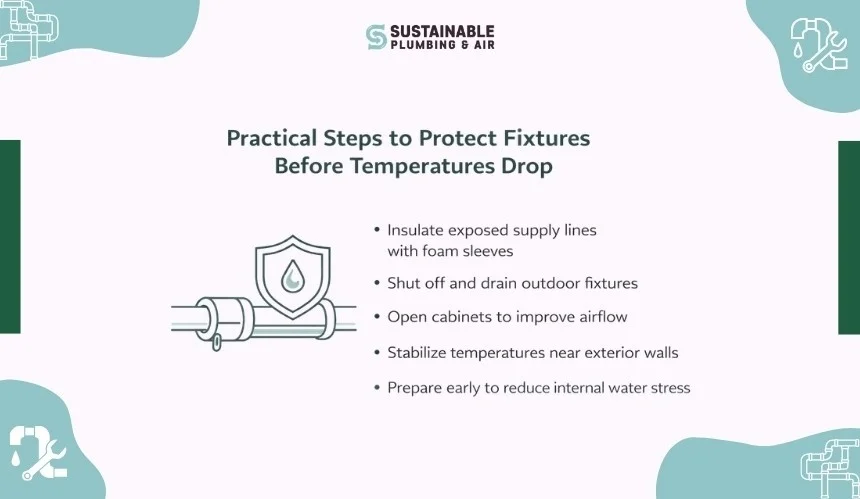
Preventing cold-related fixture damage works best when preparation starts before freezing temperatures arrive. This stage focuses on reducing exposure, limiting internal water stress, and stabilizing conditions around vulnerable fixtures.
These actions are most effective when completed early, allowing homeowners to address risk areas calmly rather than reacting under time pressure.
Adding insulation to exposed supply lines helps slow heat loss and stabilize internal water temperature. Foam pipe sleeves and thermal wraps are especially useful for fixtures near exterior walls, crawl spaces, or utility rooms.
In parts of East Austin, where a mix of older and renovated homes often includes partially insulated wall cavities, this step can significantly reduce the chance of overnight freezing without altering the fixture itself.
Outdoor faucets should be isolated from interior water supply lines before cold weather sets in. Turning off the dedicated shutoff valve and draining remaining water removes the pressure source that causes cracking during freezes.
This step is particularly important for fixtures that are rarely used during winter, as stagnant water freezes faster and expands more aggressively inside enclosed valve bodies.
Indoor fixtures benefit from balanced air circulation rather than direct heat. Opening cabinet doors beneath sinks allows warm air to reach supply lines, helping maintain a consistent temperature around valves and fittings.
This approach is most effective for fixtures located against exterior walls, where temperature differences can develop quietly even while the rest of the room feels warm.
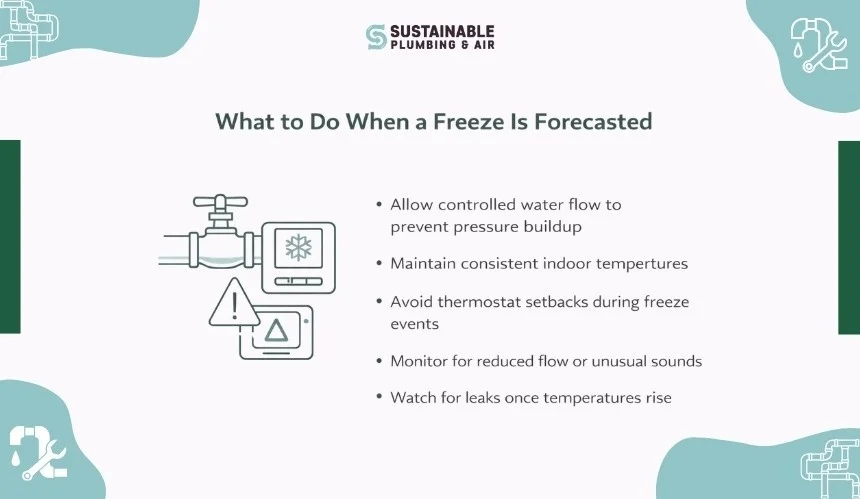
When a freeze is officially forecasted, preparation shifts from general readiness to short-term protection. At this stage, the goal is to manage water movement and temperature stability during the coldest hours, reducing internal stress on fixtures until conditions improve.
Allowing a controlled flow of water through select fixtures helps prevent pressure buildup inside valves and faucet bodies. Moving water is less likely to freeze than stagnant water, especially at points where pipes narrow inside fixtures.
This approach is most effective for fixtures that have already been identified as cold-sensitive rather than applied uniformly throughout the home.
Indoor temperature stability becomes more important during active freeze periods. Thermostat setbacks that normally save energy can increase fixture risk when exterior temperatures fall quickly.
Homes near open greenbelt areas such as Zilker Park may experience sharper nighttime temperature drops, making consistent indoor heating especially important for fixtures located along exterior walls.
Visual and auditory checks during freezing nights help catch early warning signs before damage escalates. Reduced water flow, unusual sounds when faucets are turned on, or moisture near fixture bases can indicate partial freezing.
Early detection allows corrective steps to be taken while damage is still limited, rather than discovering issues after temperatures rise and pressure returns.
Cold-related fixture damage is not always obvious immediately after temperatures rise. In many cases, early indicators appear gradually as water pressure normalizes and fixtures are used again. Paying attention to subtle changes helps identify problems before they escalate, and our team can also assess water leak detection systems for early prevention.
Recognizing these signs early allows for timely intervention, reducing the risk of secondary water damage and more extensive fixture failure.
Cold-weather damage does not have to turn into a costly surprise. Schedule a residential plumbing inspection before winter arrives.If you want experienced eyes on your fixtures before or after a freeze, Sustainable Plumbing & Air helps Austin homeowners protect their plumbing with practical, climate-aware solutions. A quick inspection today can prevent emergency repairs tomorrow and keep your home running smoothly through winter, along with our emergency plumbing services if urgent issues occur.
Winter protection should remain in place until overnight temperatures consistently stay above freezing. In Austin, delayed cold snaps are common, so removing insulation or reopening outdoor fixtures too early can expose plumbing to unexpected temperature drops later in the season.
Modern fixtures are more efficient but not immune to cold stress. Many newer designs use internal cartridges and mixed materials that can crack internally when exposed to rapid temperature changes, even if the fixture exterior appears undamaged.
Freeze stress often causes internal fractures rather than immediate breaks. As water pressure normalizes, weakened components may begin leaking or restricting flow, making damage appear several days after the cold event rather than during the freeze itself.
Yes. Fixtures located in low-airflow zones, recessed cabinets, or enclosed wall cavities tend to retain cold longer. These conditions slow warming after a freeze, increasing internal stress even when the surrounding room feels comfortable.
Not always. Internal valve assemblies, seals, and connection points can crack without external signs. Many freeze-related fixture failures are only detected through performance changes, pressure issues, or moisture appearing later around surrounding surfaces.